 Visit MrsMakeup UK
Four Clean Primers for Mature Skin — All Available in Ireland
Most primers marketed at mature skin are making the problem worse. Creasing silicones that fill lines on application and migrate into them as they dry. Drying alcohol that strips moisture from a barrier that is already struggling. Synthetic fragrance that penetrates more readily through thinning skin and raises sensitisation risk with every use. These are not niche ingredients in obscure brands — they appear in popular, heavily marketed primers at every price point.
The good news is that the primers that actually work for mature skin are straightforward to identify once you know what to look for — and several of them are very affordable. Below you'll find four clean picks that pass our ingredient review, from €11 to €29.
Our Top Primers for Mature Skin
- Haruharu Wonder Black Rice NAD+ Serum Mist — best all-round, packed with barrier actives
- e.l.f. Illuminating Face Primer — best budget pick
- Laura Geller Spackle Moisturising Face Primer — best conventional grip primer, fragrance & silicone-free
- BPerfect Mrs Glam Glorious Skin Illuminating Primer — best luminous finish, Irish brand
Haruharu Wonder Black Rice Probiotics 2% NAD+ Serum Mist
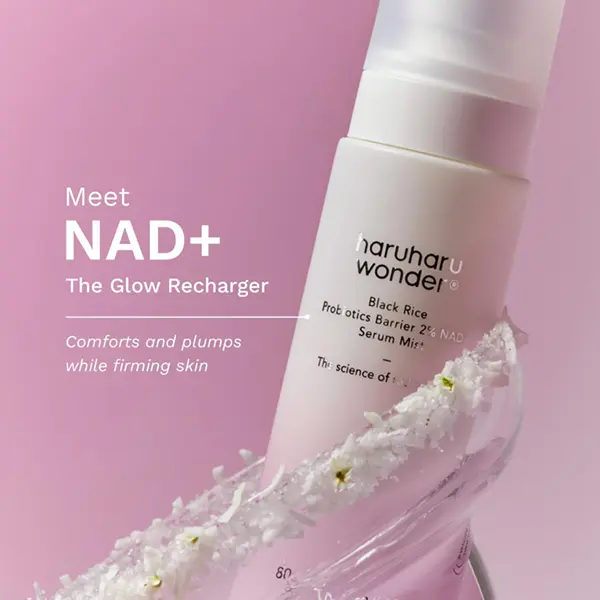
This is the most interesting pick on the list and the one most likely to change how you think about primer entirely. The Haruharu NAD+ Serum Mist approaches primer from a skincare angle rather than a makeup angle — instead of filling pores with a silicone film, it floods skin with barrier-supporting actives before foundation goes on. NAD+, a five-ceramide complex, squalane, panthenol, glycerin, galactomyces ferment, bifida ferment, and rice extract. That's an unusually strong profile for anything being used as a primer.
At under €17 at time of writing, it's also excellent value for what's in the formula. Mature skin that is dry or dehydrated underneath rather than just on the surface will respond particularly well to this approach — it addresses the cause rather than papering over it.
🏆 Mrs Makeup — Best Primer for Mature Skin Ireland
- ✅ Fragrance-free
- ✅ Silicone-free
- ✅ Alcohol-free
- ✅ Paraben-free
- ✅ PFAS-free
- ✅ Vegan & cruelty-free
- 🌿 NAD+ — cellular energy support active
- 🌿 Five-ceramide complex — barrier repair and lipid replenishment
- 🌿 Squalane — lightweight emollient
- 🌿 Panthenol (vitamin B5) — soothing and conditioning
- 🌿 Glycerin — draws moisture to the skin
- 🌿 Galactomyces ferment filtrate — fermented brightening active
- 🌿 Bifida ferment lysate — supports skin microbiome balance
- 🌿 Black rice extract — antioxidant botanical
Verdict: ✅ Clean — the most active-rich formula on this list. A skincare-first primer step for dry or dehydrated mature skin.
Affiliate links: Some links on this page go to Amazon. If you buy through them we may earn a small commission at no extra cost to you. It never influences what we recommend — a product either passes our ingredient standard or it doesn’t.
e.l.f. Illuminating Face Primer
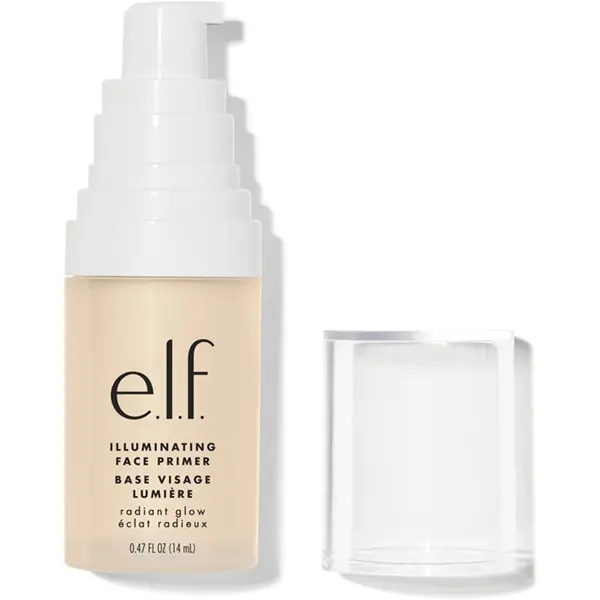
At €11 this is the budget pick — and it earns its place on the list rather than just being included for a low price point. The e.l.f. Illuminating is fragrance-free and delivers a light-reflecting luminous finish that works well on mature skin.
If you want to try a clean primer without committing to a higher price point, this is the sensible starting point. Worth noting this is the Illuminating variant specifically — not the e.l.f. Power Grip or Putty primers, which have different formulas.
🏆 Mrs Makeup — Best Budget Primer for Mature Skin Ireland
- ✅ Fragrance-free
- ✅ Alcohol-free
- ✅ Paraben-free
- ✅ PFAS-free
- ✅ Vegan & cruelty-free
- 🌿 Glycerin — humectant, draws moisture to the skin
- 🌿 Aloe vera (Aloe barbadensis) — soothing and hydrating
- 🌿 Tocopherol — vitamin E antioxidant
Verdict: ✅ Clean. A reliable fragrance-free budget pick.
Laura Geller Spackle Skin Perfecting Moisturising Face Primer

At €29 this is the most expensive pick on the list, and the strongest conventional grip primer we've found for mature skin. Fragrance-free, silicone-free, and built around an ingredient list that reads more like a skincare serum than a primer. Dual hyaluronic acid (sodium hyaluronate and sodium hyaluronate crosspolymer), squalane, polyglutamic acid, jojoba oil, shea butter, aloe vera, and vitamin E. These aren't trace amounts for label appeal — the formula is genuinely constructed around hydration and barrier support.
One important note: this recommendation applies specifically to the Hydrate/Moisturising variant. The Original, Champagne, Ethereal Rose, Bronze and Diamond Spackle versions all contain creasing silicones and should not be substituted. The Moisturising version is the only clean Spackle variant.
🏆 Mrs Makeup — Best Conventional Primer for Mature Skin Ireland
- ✅ Fragrance-free
- ✅ Silicone-free
- ✅ Alcohol-free
- ✅ Paraben-free
- ✅ PFAS-free
- ✅ Cruelty-free
- 🌿 Dual sodium hyaluronate — standard + crosspolymer for surface and deeper hydration
- 🌿 Squalane — lightweight emollient, excellent for dry or mature skin
- 🌿 Polyglutamic acid — humectant that holds more moisture than hyaluronic acid
- 🌿 Jojoba oil — nourishing skin conditioning
- 🌿 Shea butter — rich emollient for barrier support
- 🌿 Aloe vera (Aloe barbadensis) — soothing and hydrating
- 🌿 Tocopheryl acetate — vitamin E antioxidant
Verdict: ✅ Clean. If you want a conventional grip primer, this is the pick.
BPerfect Mrs Glam Glorious Skin Illuminating Primer
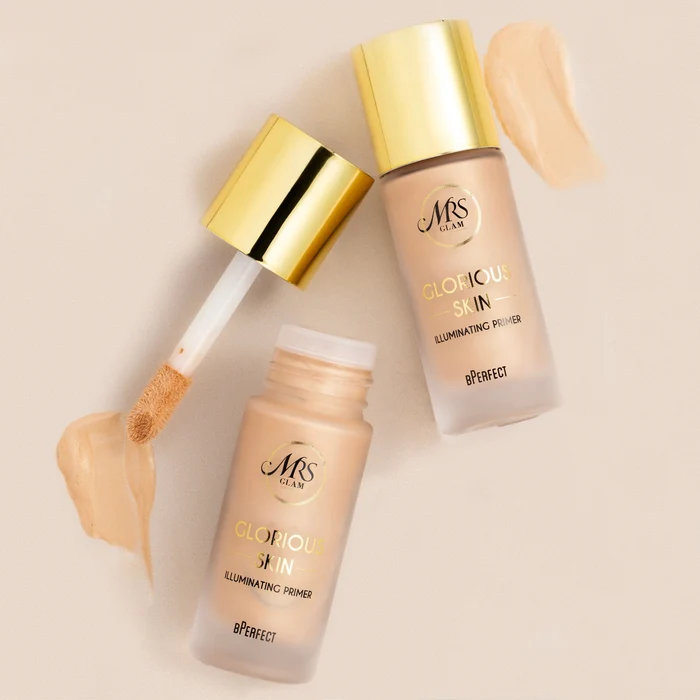
BPerfect is an Irish brand, which means this one is worth flagging specifically for Irish readers — it's easier to find, often faster to deliver, and supporting an Irish brand is a bonus. The Mrs Glam Glorious Skin is a luminous-finish primer with glycerin, niacinamide, and sodium hyaluronate as its key actives. At €21.95 it sits comfortably in the mid-range and delivers a lit-from-within glow that suits mature skin far better than the flat matte finish of most traditional primers.
Fragrance-free with no creasing silicones.
🏆 Mrs Makeup — Best Luminous Primer for Mature Skin Ireland
- ✅ Fragrance-free
- ✅ Alcohol-free
- ✅ Paraben-free
- ✅ PFAS-free
- ✅ Vegan & cruelty-free
- 🌿 Niacinamide — pore-minimising and brightening
- 🌿 Sodium hyaluronate — hydration
- 🌿 Glycerin — humectant, draws moisture to the skin
Verdict: ✅ Clean. Gives skin a soft, lit-from-within glow — best suited to normal and dry skin.
Primer Tips for Mature Skin
The order of application matters more than most people realise. Moisturiser first, then give it five minutes to sink in before primer. Applying primer over damp moisturiser dilutes it and reduces grip. The five-minute wait is one of the simplest things you can do to improve how your whole base performs through the day.
If you're using the Haruharu Serum Mist, mist it onto clean skin or over moisturiser and allow it to absorb before foundation — it works as the last skincare step rather than a conventional primer layer. Don't expect it to grip foundation the way a conventional primer does; what it gives you instead is a better-hydrated base that foundation sits more comfortably on.
Avoid mixing silicone-based primers with clean foundations. If your primer contains creasing silicones, those migrate into lines as they dry — and any foundation applied on top goes with them. The clean primer and clean foundation combination is what prevents the settling that most mature skin users have experienced with conventional products.
Primer Ingredients to Avoid on Mature Skin
The same ingredient systems that cause problems in foundation are present in primers — often at higher concentrations because primers are designed to grip and hold.
Not sure which products to trust?
Our Beauty Assistant checks ingredients, flags problem formulas, and finds clean alternatives — just ask.
Frequently Asked Questions
Our top pick for mature skin in Ireland is the Haruharu Wonder Black Rice NAD+ Serum Mist — fragrance-free, silicone-free, and packed with barrier-supporting actives including NAD+, five ceramides, squalane, and panthenol. For a budget-friendly starting point, the e.l.f. Illuminating is a solid fragrance-free option at €11. If you prefer a conventional silicone-free grip primer, the Laura Geller Spackle Moisturising is the strongest we've found in that category. All are available on Amazon.ie.
The wrong primer does, yes — specifically primers containing cyclosiloxanes (D4, D5, D6). These fill lines initially and migrate into them as they dry, making lines appear more pronounced through the day. None of the primers on this page contain cyclosiloxanes. A clean hydrating primer should create a slightly smoother surface without the settling behaviour. If your current primer is making lines worse, the formula is the problem.
Yes — but the primer needs to be hydrating rather than mattifying or pore-minimising. For dry mature skin, look for primers with hyaluronic acid, squalane, or glycerin as key actives, and avoid anything with high alcohol denat. The Haruharu NAD+ Serum Mist and Laura Geller Spackle Moisturising are both specifically suited to dry skin. Apply over a good moisturiser and give it five minutes before foundation.
Silicone-free removes the primary category of problematic ingredients — cyclosiloxanes — so it's a reliable starting criterion. It doesn't guarantee the primer is otherwise well-formulated; some silicone-free primers still contain drying alcohol or synthetic fragrance. The Haruharu Serum Mist and Laura Geller Spackle Moisturising are both silicone-free and pass our full ingredient review. The e.l.f. Illuminating contains dimethicone — a linear silicone used for slip that doesn't carry the same line-settling risk as cyclosiloxanes, which is why it made the list.
A good moisturiser hydrates but doesn't provide the foundation grip or barrier separation that primer does. For mature skin, skipping primer means foundation sits in direct contact with skin that is more porous and reactive than it was twenty years ago. For a full makeup look intended to last through the day, primer is worth including. For very light coverage day-to-day, a well-chosen moisturiser alone may be sufficient — but the Haruharu Serum Mist sits close enough to skincare that it's easy to add without feeling like an extra step.
Complete your mature skin routine
- Foundation for mature skin Ireland — clean picks that won't settle into lines
- Concealer for mature skin Ireland — clean picks that don't settle under the eye
- Clean makeup Ireland — how our ingredient standard works
- Vegan makeup Ireland — fully certified picks across all categories