 Visit MrsMakeup UK
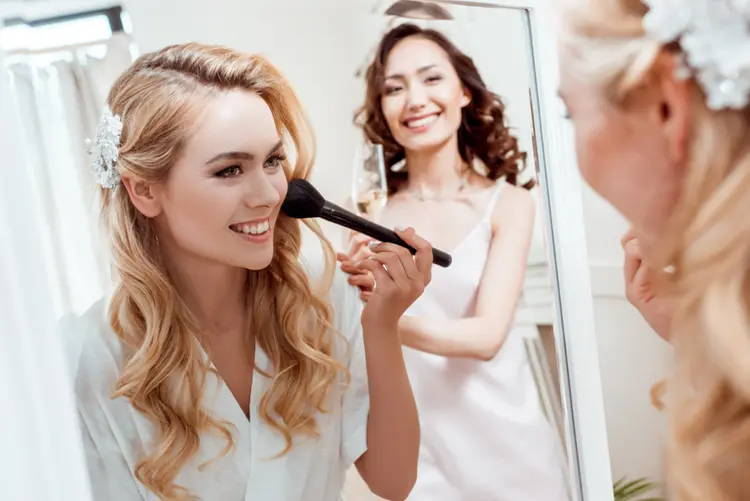
Bridal makeup in Ireland is not a one-size-fits-all situation. Some brides hire a professional makeup artist — particularly for church ceremonies where the day runs long and photography expectations are high. Others do their own makeup, or hand the brushes to a trusted friend or family member. All three approaches are completely valid, and all three come with their own things to know.
This guide covers the full picture: what a professional artist will cost, how the church versus civil ceremony split tends to play out, and exactly what you need if you are doing it yourself or briefing someone who is doing it for you. If you are planning a look that balances longevity with a luminous finish — the most popular bridal choice — our dewy skin guide walks through the skincare and makeup layering technique that makes it last.
Whether you are hiring a professional or doing it yourself, the goal is the same — makeup that looks like you at your best, all day long.
At a Glance: Bridal Makeup Pricing in Ireland
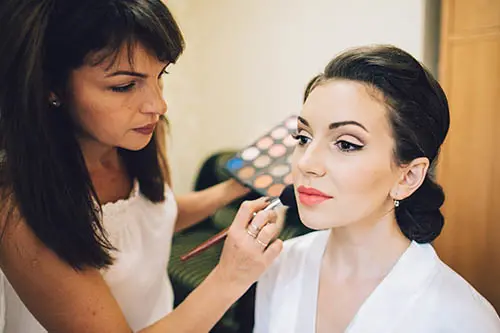
Before diving into the detail, here is the full picture in one place. These are typical market rates — individual artists may sit above or below these ranges depending on experience and location.
| Service | Typical Cost | Notes |
|---|---|---|
| Bridal makeup — wedding day | €100 – €250 | Includes lashes at the higher end |
| Bridal trial | €50 – €120 | Sometimes deducted from final balance |
| Bridesmaid makeup | €60 – €100 per person | Group discounts often available for 4+ |
| Travel fee | Varies | Charged for venues outside artist's base area |
| Airbrush foundation add-on | €20 – €50 extra | Not always offered; ask upfront |
What Does Bridal Makeup Cost on the Wedding Day?
For the bride herself, expect to pay roughly €100 to €250 for makeup application on the wedding day. The lower end of that range typically covers a standard application without lashes or premium products, while the higher end usually includes false lashes, airbrush or long-wear foundation, and a more experienced or in-demand artist.
Prices tend to run higher in Dublin and other major cities compared to more rural areas, partly reflecting cost of living and partly reflecting demand — the most sought-after artists in any city can charge a premium regardless of location.
Does the Trial Cost Extra?
Almost always, yes. The bridal trial is usually billed separately from the wedding day price, typically costing between €50 and €120. Some artists deduct the trial fee from your final balance if you go on to book them for the wedding itself, but this is not universal — always ask directly rather than assuming.
Don't skip the trial. It is your one opportunity to test how the makeup wears over several hours and how it photographs. The cost of a bad surprise on the morning of your wedding far outweighs a €75 trial fee.
How Much Does Bridesmaid Makeup Cost?
Bridesmaid makeup is generally priced lower than the bridal rate, typically €60 to €100 per person, since it usually skips false lashes and takes less application time than the bridal look. Many artists offer a modest discount per head when booking a full bridal party of four or more, so it is worth asking about group rates when you first enquire.
Travel Fees and Minimum Booking Requirements
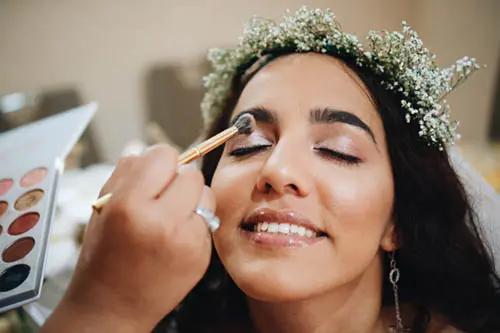
Ireland has no shortage of beautiful, remote wedding venues — and that scenic appeal often comes with a travel fee attached. Artists frequently charge extra for venues outside their base area, and many require a minimum number of faces to justify the journey.
Always ask about these before booking
- Travel fee for your venue — specify your exact getting-ready location
- Minimum number of faces required (commonly bride + three bridesmaids)
- Whether there is a minimum spend for weekend dates
- Whether a mileage rate or flat fee applies for remote venues
These fees are rarely advertised upfront and are one of the most common sources of bridal makeup budget surprises. A quick email before you fall in love with an artist's portfolio saves an awkward conversation later.
What's Actually Included in the Price?
Most quoted bridal makeup prices include the application itself, false lashes, and a small touch-up kit or product left with you for later in the day. Beyond that, inclusions vary significantly between artists.
Common add-ons that increase your final cost:
- Premium airbrush foundation — better longevity for photography, but typically priced as an upgrade
- Skincare prep treatment — some artists offer a pre-makeup facial or barrier prep step
- Second touch-up visit — useful for long wedding days where the evening reception is separate from the ceremony
- Hair styling — occasionally bundled with makeup by dual-trained artists, sometimes at a combined rate
Always ask for a clear, itemised quote before booking so you know exactly what your price covers and what would cost extra.
How to Book Without Overpaying
The best bridal makeup artists in Ireland book out 12 to 18 months in advance, particularly for peak wedding season from May through September. Securing your date early is not just about availability — it also protects you from last-minute premium pricing that some artists apply when a date is filling up fast.
-
1
Book as early as possible
Lock in your date the moment your venue and date are confirmed — before you have even chosen your dress.
-
2
Match the artist to your skin type, not just their portfolio
Check that they have experience with your specific skin tone and type. A mismatch means paying full price for a look you need to redo anyway.
-
3
Ask for a full itemised quote before committing
Trial fee, travel, add-ons, minimum faces — get every cost in writing before you sign anything.
-
4
Never skip the contract and deposit
A signed contract protects both your booking and your budget if anything changes before the big day. If an artist does not offer one, treat that as a red flag.
-
5
Use the trial to test ingredients, not just the look
If you have sensitive or reactive skin, ask your artist what foundation they plan to use. You have every right to request alternatives — especially for a day-long wear event.
Church Weddings vs Civil Ceremonies: Does It Change the Makeup Decision?
It tends to, yes. Church weddings in Ireland typically run longer — ceremony, photography, travel to the venue, dinner, and an evening reception can mean 12 to 14 hours from getting-ready to last dance. That kind of wear time pushes more brides toward a professional artist, and toward specifically requesting long-wear foundations and setting techniques that hold up across the full day and into candlelit evening lighting.
Civil ceremonies — particularly those held at the venue itself — tend to be a tighter, shorter format. The gap between getting ready and being done for the evening is smaller, which makes DIY or friend-assisted makeup a much more realistic option. You still want it to last through the ceremony, speeches and first dance, but you are not necessarily asking it to survive until midnight. For ingredient-checked foundation picks built for exactly this kind of extended wear, see our guide to long-wear foundations for Irish weather.
⛪ Church Ceremony
- Longer day — 12+ hours common
- Higher photography expectations
- Flash photography at altar
- Leans toward professional artist
- Long-wear foundation essential
🏛️ Civil Ceremony
- Often shorter, venue-based
- More relaxed timeline
- DIY or friend more achievable
- Still needs to last 6–8 hours
- Setting spray non-negotiable
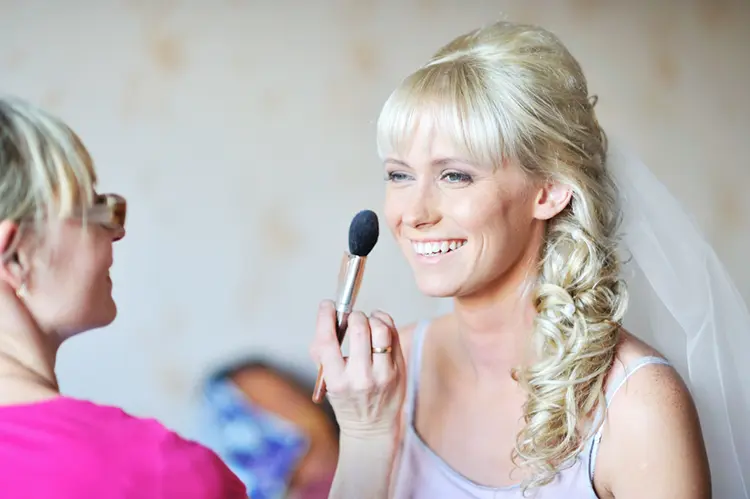
Doing Your Own Bridal Makeup — What You Actually Need to Know
A lot of brides do their own makeup, and do it brilliantly. The difference between everyday makeup and bridal makeup is not really about skill level — it is about duration, lighting and the specific demands of being photographed all day. Getting those three things right is what separates a look that still holds up at 10pm from one that needs fixing by the end of the ceremony.
The Core Rule: Everything Needs to Last Longer Than You Think
Whatever your usual wear time is, assume the wedding will need at least double. Getting-ready photos happen before the ceremony, so your makeup is already working before you have even left the house. A setting routine you might skip on a normal day — primer, powder in the right places, setting spray — becomes non-negotiable here. If you have sensitive or reactive skin, our sensitive skin routine guide covers how to prep the skin barrier before a long-wear makeup day. For choosing a clean foundation you can trust for photography, see our guide to natural foundation in Ireland.
DIY bridal makeup: the non-negotiables
- Long-wear or transfer-proof foundation — not your everyday formula
- Eye primer — the eyelid is warm and mobile all day; shadow will crease without it
- Waterproof mascara and liner — tears happen at both church and civil ceremonies
- Translucent setting powder on the T-zone before you leave
- Setting spray as the final step — seals everything and adds humidity resistance
- A small touch-up kit for your bag: blotting papers, a lip product, concealer
Do a Full Trial Run on Yourself
Exactly as a professional artist does a trial, you should too. Do your full intended bridal look on a day you have a few hours free, then wear it for as long as possible — ideally through a meal, outdoors, and into the evening. Take photos in different lighting. You will find out very quickly which product is not holding up, which shade reads differently in flash photography than in your bathroom mirror, and whether the lip colour needs topping up after eating.
Flash Photography Changes Everything
Natural light and flash light behave very differently, and this catches a lot of DIY brides off guard. Products with SPF or strong optical diffusers can show as a white cast in flash photography. Heavy powder on the face can look flat or chalky in photos even when it looks fine in a mirror. If your ceremony or venue is going to involve a photographer with a flash — which a church almost certainly will — it is worth taking a few test shots of yourself with a phone flash before the big day to check how your products read.
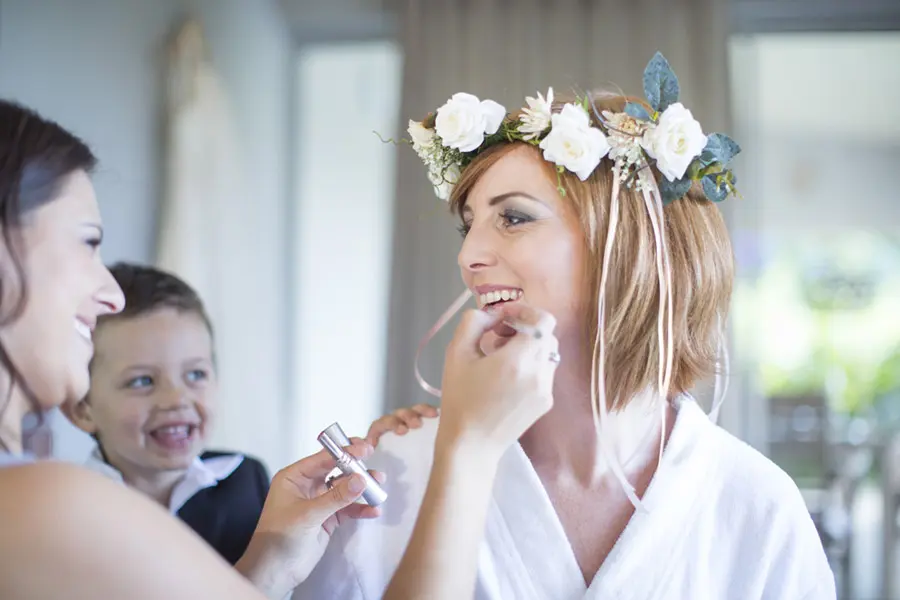
Getting a Friend or Family Member to Do Your Makeup
This is more common than the beauty industry would have you believe, and it works well when you set it up properly. The main risk is not skill — it is lack of preparation and unclear communication about what you actually want.
- Book time, not just a favour. Treat it as an actual appointment. Give them two to three hours with no other morning commitments overlapping.
- Do a practice run together, in advance. Not the morning before — at least two weeks out, so there is time to adjust if anything needs changing.
- Brief them specifically. Show reference photos, describe exactly what you want, and be honest about what you are not sure about. Vague direction on the morning is how things go sideways.
- Supply the products. Use your own tested makeup rather than theirs, especially if you have sensitive skin or particular products you know photograph well on you.
- Have a touch-up plan. Agree in advance who is carrying the kit and who is responsible for a check before the ceremony starts.
On the product question: if a friend is doing your makeup, they are likely using products they know and trust — which may not be what photographs best on your skin tone, or what will hold up for 12 hours. It is completely reasonable to buy or borrow specific products for the day and ask them to use those instead. The foundation in particular is worth getting right.
Have sensitive or reactive skin?
Bridal makeup is a full-day wear situation — potentially 12 hours or more. If certain ingredients cause redness, breakouts or irritation, it is worth knowing what is going into your artist's kit before the wedding morning. Fragrance, certain silicones, and alcohol-based setting sprays are the most common culprits. Don't be embarrassed to ask — a professional will be glad you raised it at the trial rather than the morning of.
Looking for a foundation that will last all day without problem ingredients?
We assessed the most popular bridal foundations — most of the famous names failed on ingredients. Our Beauty Assistant can tell you which ones actually passed, and find the right match for your skin type.
Bridal Makeup in Ireland — Frequently Asked Questions
Bridal makeup in Ireland typically ranges from around €100 to €250 for the bride on the wedding day, depending on the artist's experience, location and whether false lashes or premium products are included. Trials are usually charged separately, often between €50 and €120.
Yes, almost all Irish makeup artists charge for the trial separately from the wedding day price. Trial costs generally sit between €50 and €120 and are sometimes deducted from the final balance if you book the artist for your wedding day.
Bridesmaid makeup typically costs between €60 and €100 per person in Ireland, slightly less than the bridal rate since it usually does not include lashes or the same length of application time. Many artists offer a small discount per person when booking a full bridal party.
Many artists charge a travel fee for venues outside their base area, particularly for remote or rural locations. Some also require a minimum number of faces — such as the bride plus three bridesmaids — to justify travelling on a weekend. Always ask about travel costs and minimums when you first enquire.
The most in-demand Irish bridal makeup artists book out 12 to 18 months in advance, especially for peak wedding season between May and September. Secure your artist as soon as your date and venue are confirmed, even before you have chosen your dress.
Yes, a booking deposit and signed contract are standard practice among professional Irish makeup artists to secure your wedding date. Always read the cancellation policy carefully before paying the deposit.
Most bridal makeup prices include the application itself, false lashes, and touch-up products left with you for the day. Skincare prep, premium airbrush foundation, or a second touch-up visit later in the day are often available as add-ons at extra cost — always ask exactly what is included before booking.
Most professional artists work with long-wear, high-coverage foundations suited to photography — airbrush formulas and full-coverage liquid foundations are common choices. If you have sensitive or reactive skin, it is worth asking your artist at the trial exactly which foundation they plan to use and whether alternatives are available.
Absolutely, and many brides do. The key differences from everyday makeup are duration and photography. You need a long-wear foundation, eye primer, waterproof mascara and liner, translucent setting powder on the T-zone, and a setting spray as a final seal. Do a full practice run at least two weeks before the wedding, take flash photographs of yourself to check how products read, and prepare a small touch-up kit for your bag on the day.
Church weddings typically run longer than civil ceremonies — often 12 hours or more from getting ready to the end of the evening — and involve flash photography at the altar. This puts more demand on your makeup lasting power, which is why more brides with church ceremonies opt for a professional artist. That said, it is entirely possible to do your own for a church wedding if you use the right long-wear products, do a thorough trial run, and have a touch-up plan for the day.
Yes, and it works well when it is set up properly. Do a practice run together at least two weeks before the wedding, show clear reference photos of what you want, supply the specific products you want used — particularly the foundation — and book a proper block of time on the morning rather than fitting it around other tasks. Clear communication in advance is what makes the difference.
The essentials for a DIY bridal look are a long-wear or transfer-proof foundation, eye primer, waterproof mascara and eyeliner, a setting powder for the T-zone, and a setting spray to seal everything at the end. A touch-up kit for your bag — blotting papers, your lip product, a small concealer — means you are covered for the whole day without needing a full reapplication. Not sure which specific products will work for your skin type? Our Beauty Assistant can help narrow it down.