 Visit MrsMakeup UK
Four Clean Foundations for Mature Skin — All Available in Ireland
Most foundations marketed at mature skin are still built around the same silicone systems, synthetic fragrance, and filler ingredients that dehydrate the skin barrier and accelerate the visible signs of ageing — ironic, given the packaging. Every time we run foundations through our ingredient review, red flags are the norm rather than the exception — including products sitting in the €35–€45 range. If your foundation has been making your skin look older, it's probably not your technique.
You've tried the dewy finish. The damp sponge. The silicone primer. And your foundation still looks cakey by noon, pools into every line, or just sits on top of your skin like it doesn't belong there. That's almost never a technique problem. It's a formula problem — and it's fixable.
Below you'll find four clean foundations that pass our ingredient review, all at accessible price points and all available through Amazon.ie. Some of the worst offending ingredients appear in foundations at €40 and above. The picks here start well under €15 at time of writing.
Our Top Foundations for Mature Skin
- Catrice Nude Drop Tinted Serum Foundation — best all-round, fragrance-free
- Charlotte Tilbury Beautiful Skin Foundation — best premium pick, available on Space NK Ireland
- Lavera Hyaluron Liquid Foundation — best natural/certified
- e.l.f. Halo Glow Liquid Filter — best for a lighter, glowy finish
Catrice Nude Drop Tinted Serum Foundation
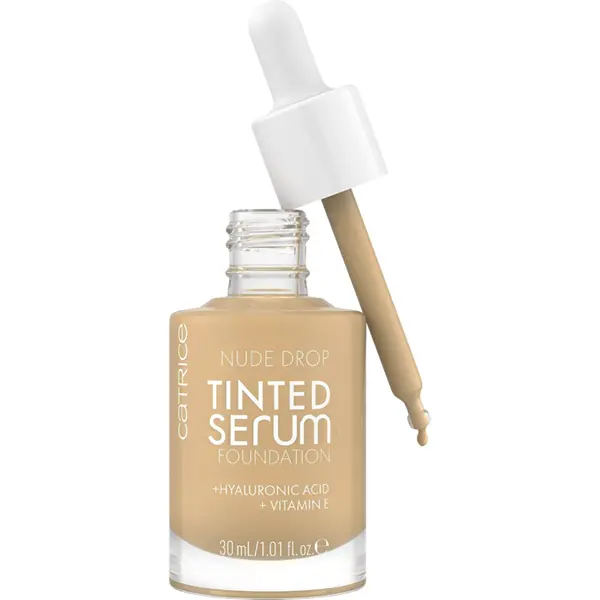
The one we'd reach for first — and at time of writing, it's priced well under €15 on Amazon.ie, which is worth pausing on. The Catrice Nude Drop passes every part of our ingredient review. It contains no cyclosiloxanes, no PFAS, no alcohol denat, no synthetic fragrance. Foundations at two or three times the price regularly fail on one or more of those points. The marketing budget goes up, the ingredient quality doesn't always follow.
What you get here is a fragrance-free, alcohol-free tinted serum that hydrates with sodium hyaluronate and sits on mature skin the way most foundations promise to but don't. It doesn't settle into lines because it's not built around the heavy silicone systems that cause that — cyclosiloxanes like cyclopentasiloxane and cyclotetrasiloxane, which you'll find listed in many popular foundations and which migrate into fine lines and pores as they dry. The Catrice doesn't contain them.
Coverage is light to medium and buildable. If you're used to fuller coverage foundations you may want to layer it or use a targeted concealer underneath, but for most mature skin types the finish is flattering without feeling like you're wearing anything heavy.
🏆 Mrs Makeup — Best Foundation for Mature Skin Ireland
- ✅ Fragrance-free — no Parfum, no fragrance allergens
- ✅ No cyclosiloxanes (D4/D5/D6) — the main cause of foundation settling
- ✅ No alcohol denat
- ✅ No parabens
- ✅ No PFAS
- ✅ Vegan & cruelty-free
- 🌿 Sodium hyaluronate — hyaluronic acid salt for hydration
- 🌿 Glycerin — humectant, draws moisture to the skin
- 🌿 Tocopheryl acetate — vitamin E antioxidant
- ℹ️ Contains dimethicone — generally safe and well-tolerated by most skin types. It locks in moisture and protects the skin without clogging pores. Very small chance of irritation for highly sensitive skin
Verdict: Clean — zero hard flags, zero soft flags. The fragrance-free formula and absence of cyclosiloxanes make this the safest starting point for sensitive or reactive mature skin.
Affiliate links: Some links on this page go to Amazon. If you buy through them we may earn a small commission at no extra cost to you. It never influences what we recommend — a product either passes our ingredient standard or it doesn’t.
Charlotte Tilbury Beautiful Skin Foundation
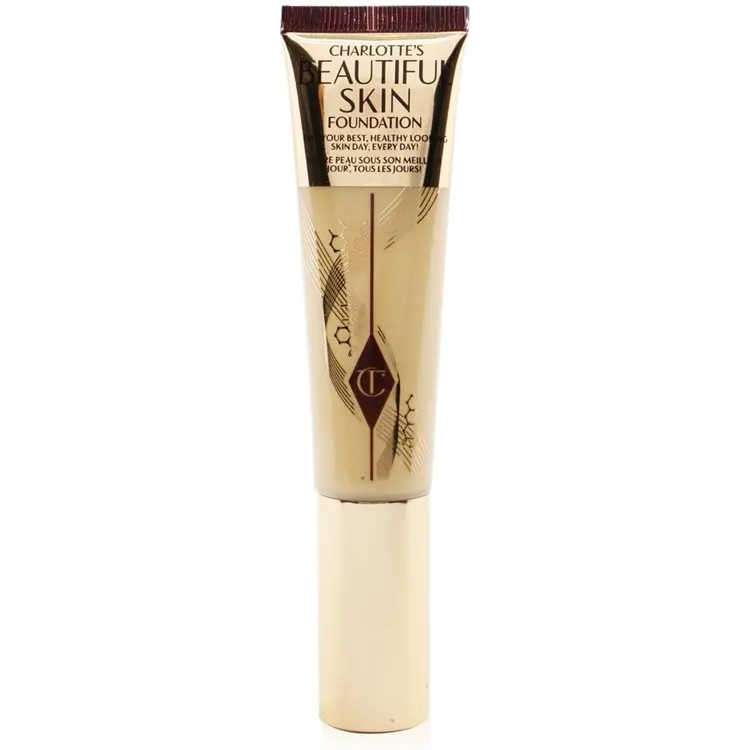
The premium pick on this list — and at under €50 at time of writing on Space NK Ireland, it earns that position. Where a lot of foundations at this price have strong marketing and average ingredients, Beautiful Skin has a formulation story worth telling. It combines sodium hyaluronate, a botanical rose complex, and coconut extract with a genuinely hydrating base that performs well on mature skin — not just in the first hour.
The finish is natural and dewy, which is the right direction for mature skin. Matte formulas tend to sit flatly and emphasise texture; the dewy finish here catches light in the way that makes skin look healthy rather than made-up. It's a medium coverage foundation that builds if you need it, and it layers well without looking heavy.
🏆 Mrs Makeup — Best Premium Foundation for Mature Skin Ireland
- ✅ No synthetic fragrance — no Parfum
- ✅ No cyclosiloxanes (D4/D5/D6)
- ✅ No alcohol denat
- ✅ No parabens
- ✅ No PFAS
- ✅ Vegan & cruelty-free
- 🌿 Sodium hyaluronate — hydration and plumping
- 🌿 Cassia angustifolia seed polysaccharide — botanical hydration support
- 🌿 Glycerin — humectant
- 🌿 Coconut fruit extract — supports water retention in the skin
- 🌿 Rosa damascena flower oil + flower water — botanical rose complex
- 🌿 Tocopheryl acetate — vitamin E antioxidant
- 🌿 Apple fruit water (Pyrus malus) — skin conditioning botanical
- 🌿 Hydrogenated olive oil unsaponifiables — skin conditioning
- ℹ️ Dimethicone — helps the formula glide on and gives it a smooth, skin-like finish; generally well-tolerated by most skin types
- ℹ️ Trimethylsiloxysilicate — helps the foundation stay put through the day; well-tolerated by most skin types
Verdict: Clean — zero hard flags, zero soft flags. The most active-rich formula on this list, with hyaluronic acid, a botanical rose complex, and coconut extract making a genuine hydration case rather than a marketing one.
Lavera Hyaluron Liquid Foundation
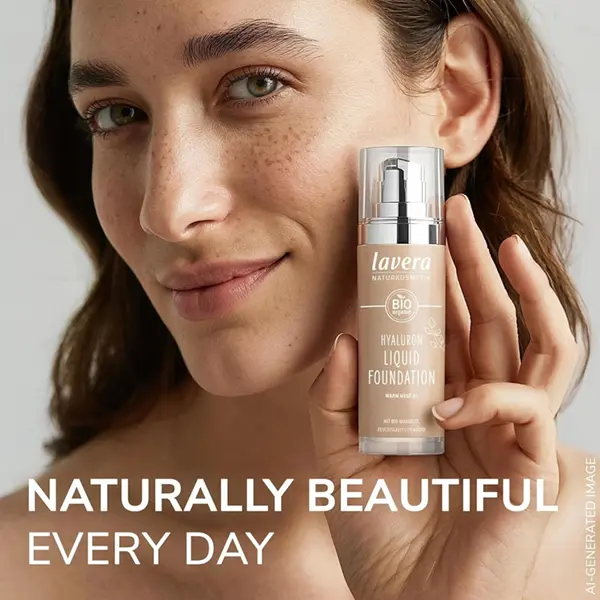
If you want a certified natural formula you can trust, Lavera is one of the few brands that earns it. The Hyaluron foundation is built around sodium hyaluronate for hydration alongside nourishing botanical oils — sweet almond and sunflower — that support the skin's lipid barrier rather than sitting on top of it. It's a satin finish that photographs well and performs in the diffuse light of an Irish day.
Lavera is NATRUE certified and consistently clean across its ingredient lists, which matters if you're avoiding the synthetic systems that most foundations rely on.
🏆 Mrs Makeup — Best Natural Foundation for Mature Skin Ireland
- ✅ No synthetic fragrance
- ✅ No cyclosiloxanes (D4/D5/D6)
- ✅ No alcohol denat
- ✅ No parabens
- ✅ No PFAS
- ✅ No synthetic silicones
- ✅ Certified natural cosmetics — vegan & cruelty-free
- 🌿 Sodium hyaluronate — hydration
- 🌿 Sweet almond oil — nourishing emollient
- 🌿 Sunflower oil — skin barrier support
- 🌿 Tocopherol — natural vitamin E antioxidant
- ⚠️ Natural fragrance (Parfum) with 6 declared allergens: limonene, benzyl salicylate, linalool, geraniol, citral, citronellol — from natural essential oils, not synthetic, but still present
Verdict: Soft flag — the natural fragrance allergens are the one caveat. Ideal for those prioritising certified natural formulas; not the right pick if you're avoiding all fragrance.
e.l.f. Halo Glow Liquid Filter
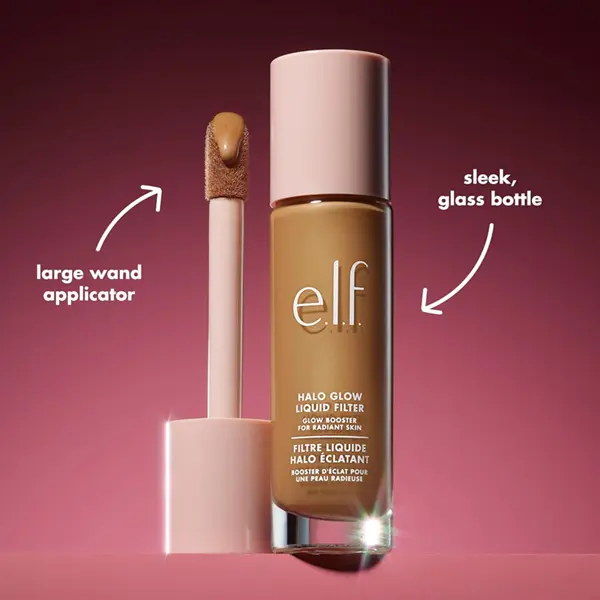
Strictly speaking the Halo Glow is a complexion booster rather than a foundation — it's designed to be mixed with your moisturiser or worn alone for a skin-like glow rather than to provide coverage on its own. We're including it here because a lot of mature skin shoppers find it outperforms foundations entirely. Less product, better finish, nothing to settle.
It contains dual forms of hyaluronic acid (sodium hyaluronate and hydrolyzed sodium hyaluronate), squalane, and calendula — all ingredients that genuinely support hydration rather than just sitting in the formula for marketing purposes. The glow it gives is the kind that makes skin look healthy rather than shiny.
🏆 Mrs Makeup — Best Glow Booster for Mature Skin Ireland
- ✅ Fragrance-free — no Parfum, no fragrance allergens
- ✅ No cyclosiloxanes (D4/D5/D6)
- ✅ No alcohol denat
- ✅ No parabens
- ✅ No PFAS
- ✅ Vegan & cruelty-free
- 🌿 Dual hyaluronic acid — sodium hyaluronate + hydrolyzed sodium hyaluronate
- 🌿 Squalane — lightweight emollient, excellent for dry or mature skin
- 🌿 Sunflower seed oil — skin barrier support
- 🌿 Tocopherol — natural vitamin E antioxidant
- 🌿 Calendula officinalis flower extract — soothing botanical
- ℹ️ Synthetic fluorphlogopite — gives Halo Glow its light-catching glow effect; a synthetic mica, not related to PFAS
- ℹ️ Polymethylsilsesquioxane — smooths texture and application; we flag it for awareness as it sits in a category worth watching, though it doesn't absorb into the skin
- ℹ️ Dimethicone — helps the formula blend smoothly; generally well-tolerated by most skin types
Verdict: Clean — no hard flags. The polymethylsilsesquioxane and synthetic fluorphlogopite are transparency notes rather than flags. Best for those who want a skin-care-first finish rather than coverage.
Foundation Tips for Mature Skin
Getting the most from any foundation on mature skin comes down to a few things that have nothing to do with the product itself. Prep matters more than it did at 30. A well-moisturised base — give it five minutes to sink in before foundation — makes a significant difference to how any formula sits. If you're using a primer, avoid silicone-heavy formulas under clean foundations; they can interact and cause the very settling you're trying to prevent.
Medium coverage beats full coverage for most mature skin types. Full coverage sits heavily and emphasises texture even when the formula is otherwise clean. A medium-coverage foundation you can layer where needed — under the eyes, around the nose — gives a more flattering result than one thick application all over.
Foundation for Mature Skin in Irish Weather
The Irish climate is actually kinder to mature skin than most — mild and damp, which means the ambient humidity supports the hydration that mature skin tends to lack. You don't need oil-control foundations built for hot summers. What you do need is something that holds in variable conditions and doesn't look flat in the low, diffuse light that characterises most Irish days.
The Catrice Nude Drop holds well through a changeable Irish day without needing the heavy film-formers that come with problematic ingredient baggage. The Charlotte Tilbury Beautiful Skin is actually a natural fit for the Irish climate too — its dewy finish benefits from a bit of ambient humidity rather than fighting it, and the hyaluronic acid and rose complex keep skin looking healthy in the low, diffuse light that characterises most Irish days.
Not sure which products to trust?
Our Beauty Assistant checks ingredients, flags problem formulas, and finds clean alternatives — just ask.
Foundation Ingredients to Avoid on Mature Skin
Most foundation settling, creasing, and mid-day breakdown on mature skin comes back to a handful of specific ingredient systems. These are the ones to check for before you buy.
Frequently Asked Questions
For most mature skin types in Ireland, a fragrance-free tinted serum or satin-finish liquid foundation without cyclosiloxanes is the best starting point. The Catrice Nude Drop is our top pick at the accessible end — fragrance-free, alcohol-free, and available on Amazon.ie. If you prefer a certified natural formula, the Lavera Hyaluron is the one to try. For a premium pick with a genuine skincare story, Charlotte Tilbury Beautiful Skin is available on Space NK Ireland and has the strongest active formula on this list.
Almost always because the foundation contains cyclosiloxanes — cyclopentasiloxane, cyclotetrasiloxane, or cyclohexasiloxane in the ingredients list. These migrate into fine lines and pores as they dry. A silicone primer on top can actually make it worse. The fix is switching the foundation formula, not the primer. None of the foundations on this page contain cyclosiloxanes.
Both can work — the formula matters more than the category. Liquid and serum foundations like the Catrice Nude Drop and Charlotte Tilbury Beautiful Skin tend to be more versatile and are the better fit for dry or dehydrated mature skin. What to avoid in either category: cyclosiloxanes, high alcohol denat, and heavy matte-setting powder systems.
With caution. Long-wear formulas typically rely on PFAS film-formers, high alcohol, or heavy cyclosiloxane systems — all problematic for mature skin. The long-wear claim is also less relevant as you get older; mature skin doesn't produce the excess sebum that breaks down foundation through the day. A clean foundation with moderate staying power will perform well without the ingredient trade-offs.
Yes — medium coverage is the sweet spot for most mature skin. Full coverage sits heavily and emphasises texture even with a clean formula. Sheer coverage may not even out skin tone enough to feel worth wearing. Medium coverage that you can build where you need it — a little extra under the eyes, around the nose — gives the most flattering result without looking or feeling heavy.
Complete your mature skin routine
- Primer for mature skin — the right base makes foundation perform significantly better
- Concealer for mature skin Ireland — clean picks that don't settle under the eye
- Clean makeup Ireland — how our ingredient standard works
- Natural foundation Ireland — broader picks beyond the mature skin edit